From Visibility To Action: Enhancing Federal IT Operations with Elastic Observability
In federal IT, the shift from traditional monitoring to comprehensive observability is no longer optional, it’s imperative. Federal agencies are under constant pressure to maintain high system availability, protect sensitive data, and ensure mission continuity, all while adapting to increasingly complex hybrid and cloud environments. Elastic Observability delivers the visibility and context agencies need to meet these demands with confidence and agility.
Elastic provides a unified platform that brings together logs, metrics, traces, and user experience data into a single observability solution. For IT leaders, this means moving from reactive troubleshooting to proactive issue prevention, streamlining operations and enabling informed, real-time decisions that support mission outcomes.
The Imperative for Observability in Federal IT
Historically, monitoring tools have operated in silos, log data in one platform, metrics in another, and traces rarely integrated at all. This fragmentation limits the ability to correlate data and understand system behavior, often leading to delays in detecting, diagnosing, and resolving incidents.
Elastic Observability addresses these challenges by integrating diverse telemetry data sources into a cohesive operational picture. The result is reduced Mean Time To Resolution (MTTR), improved system reliability, and a stronger foundation for digital modernization.
Pre-Digital Era
Trust was primarily physical and interpersonal. This era had implicit trust within closed communities.
Authentication was based on face-to-face interactions, signatures, and physical keys.
Authorization was determined by roles and responsibilities within a physical space.
Context and behavioral analysis were limited to human observation.
Environmental integrity was about physical security of locations.
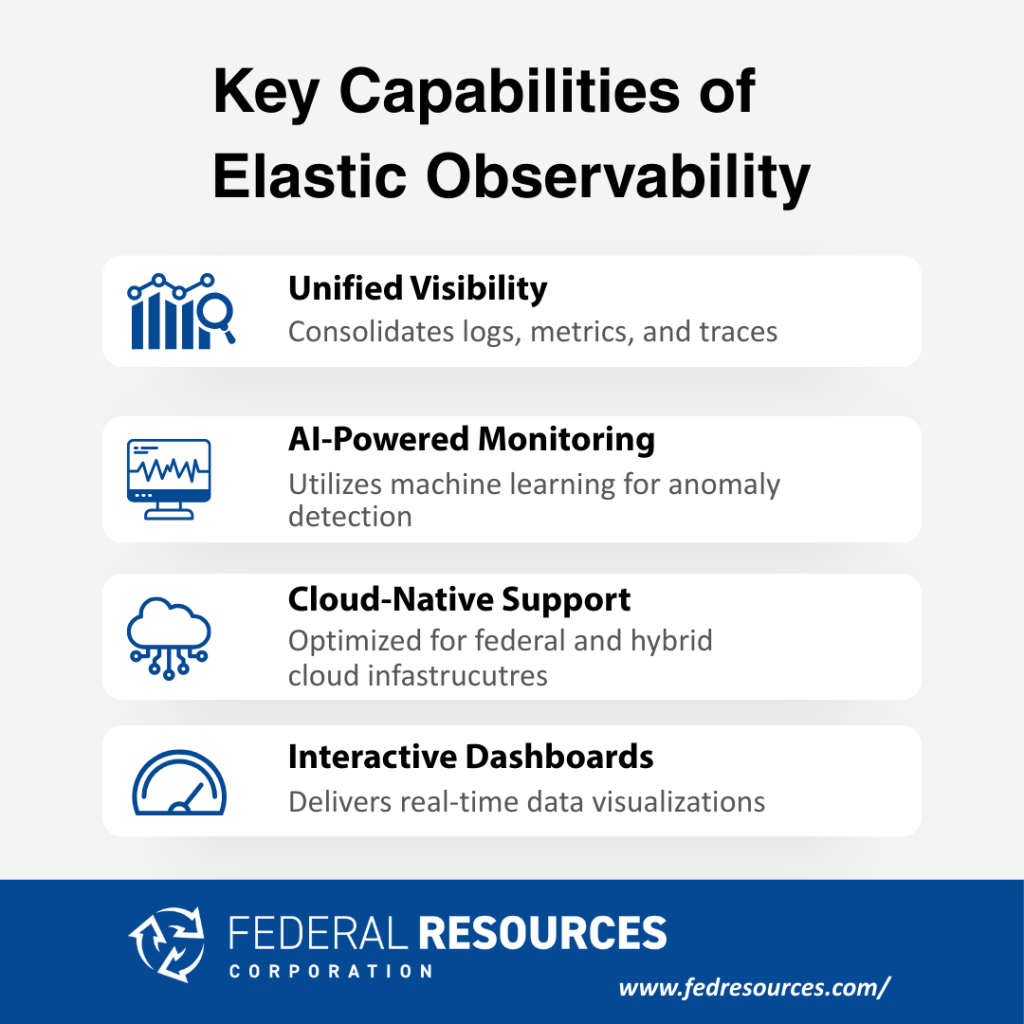
Key Capabilities of Elastic Observability
Unified Data Ingestion Elastic seamlessly ingests logs, metrics, and traces from across an organization’s IT stack. This unified data model supports rapid investigation, pattern recognition, and anomaly detection without needing to pivot between multiple tools.
Real-Time Dashboards Teams can configure custom visualizations to monitor everything from system health to service-level objectives (SLOs), allowing leadership and operations teams to stay informed an d act quickly.
Machine Learning Integration Built-in machine learning detects anomalies based on historical data trends. This empowers agencies to proactively respond to potential threats or degradations before they impact users.
Service Mapping and Distributed Tracing Elastic provides intuitive service maps and transaction traces, helping engineers understand system dependencies and pinpoint bottlenecks with precision.
Compliance and Security Alignment Elastic Observability supports agencies in meeting federal mandates, including requirements under OMB M-21-31, by delivering scalable log retention, secure access, and audit-ready reporting. Additionally, Elastic Cloud’s FedRAMP Moderate authorization ensures the platform aligns with stringent federal cybersecurity requirements.
Elastic’s observability tools also enhance Zero Trust efforts by providing continuous behavioral analytics, helping teams detect insider threats and policy violations across endpoints and applications.
Operational Impact
Agencies using Elastic have reported:
Up to 70% reduction in MTTR
Significant improvements in uptime and reliability
Better resource allocation and reduced operational burden
Enhanced incident response capabilities with integrated alerting and root cause analysis
As federal IT systems grow in complexity, observability is the key to unlocking operational resilience, agility, and mission readiness. Elastic Observability empowers agencies to move beyond isolated monitoring tools and toward unified, real-time visibility that enables faster decision-making and proactive response.
By partnering with Elastic, FRC helps agencies implement observability solutions that are scalable, compliant, and aligned to mission-critical outcomes.